

In light of the growing trend of crypto scams, Brazil’s central bank is enforcing stronger anti-fraud regulations for cryptocurrency transfers.
The new regulations, which will go into effect in 2027, will cause a 24-hour delay in cryptocurrency transfers exceeding $10,000 made to self-custody wallets or foreign virtual-asset service providers. Meanwhile, banks and other financial institutions will perform additional risk assessments.
Details of the new crypto rule
The $10,000 threshold can be applied to a single transaction or to the total amount of a customer’s cryptocurrency transfers made in a single day. Therefore, if the sum of several smaller transactions surpasses the $10,000-threshold, the rule may be activated.
The goal, according to the central bank, is to allow institutions more time to spot suspicious activity and stop money connected to financial scams from being transferred past recovery.
However, it also emphasized that the action does not mean freezing or permanently blocking cryptocurrency assets. In fact, after the necessary checks are finished, legal transactions can still take place.
Brazil’s crypto adoption and scam rate
Here, it’s worth pointing out that the on-chain value of Brazil’s cryptocurrency market hit $318 billion between July 2024 and June 2025—roughly one-third of the total for Latin America.
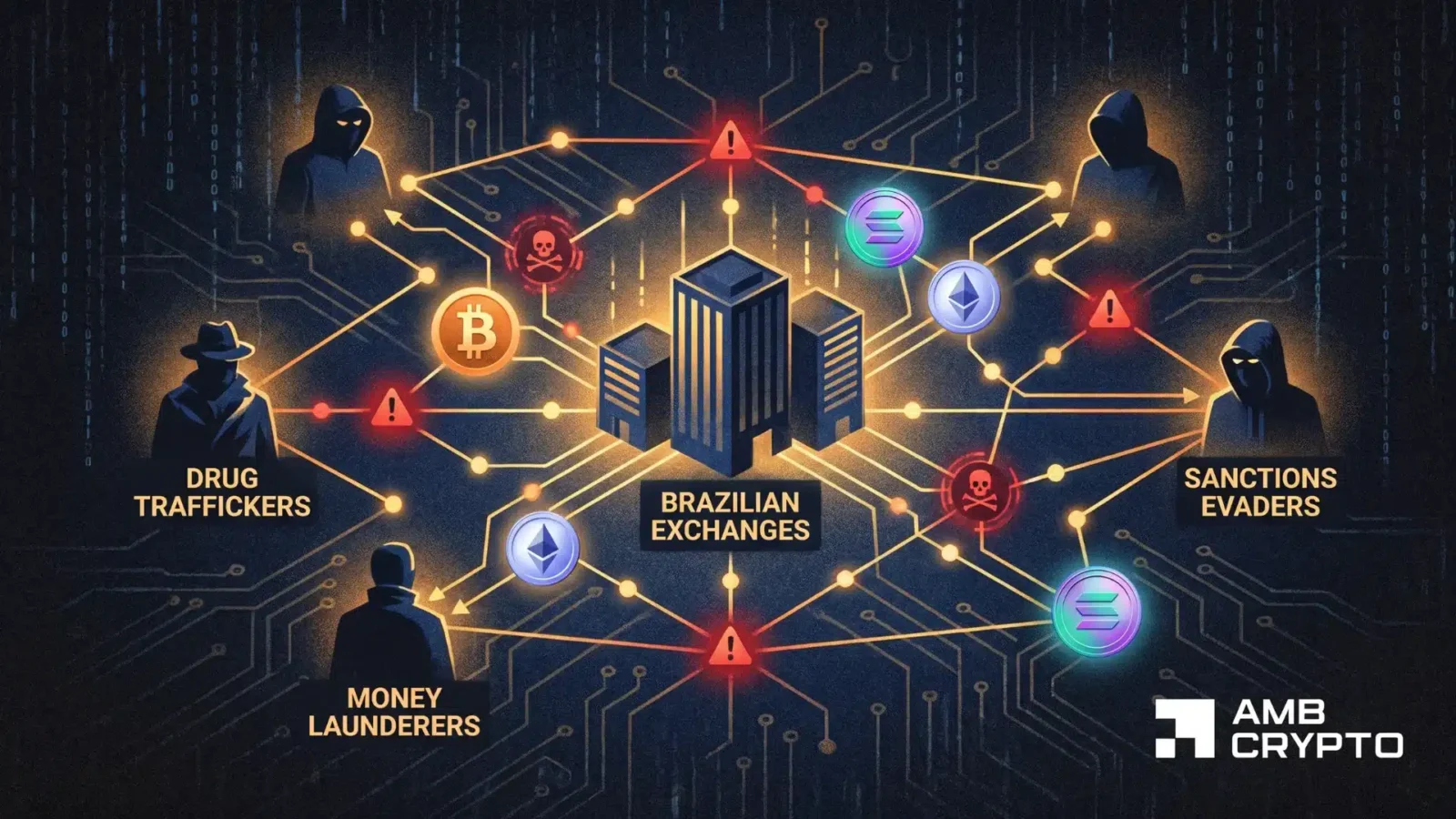
However, the market’s swift expansion has also drawn criminal actors. According to Chainalysis, for instance, over 50% of suspected illicit inflows to certain Brazilian exchanges in 2025 were connected to drug traffickers, sanctions evaders, and money-laundering networks operating in China.
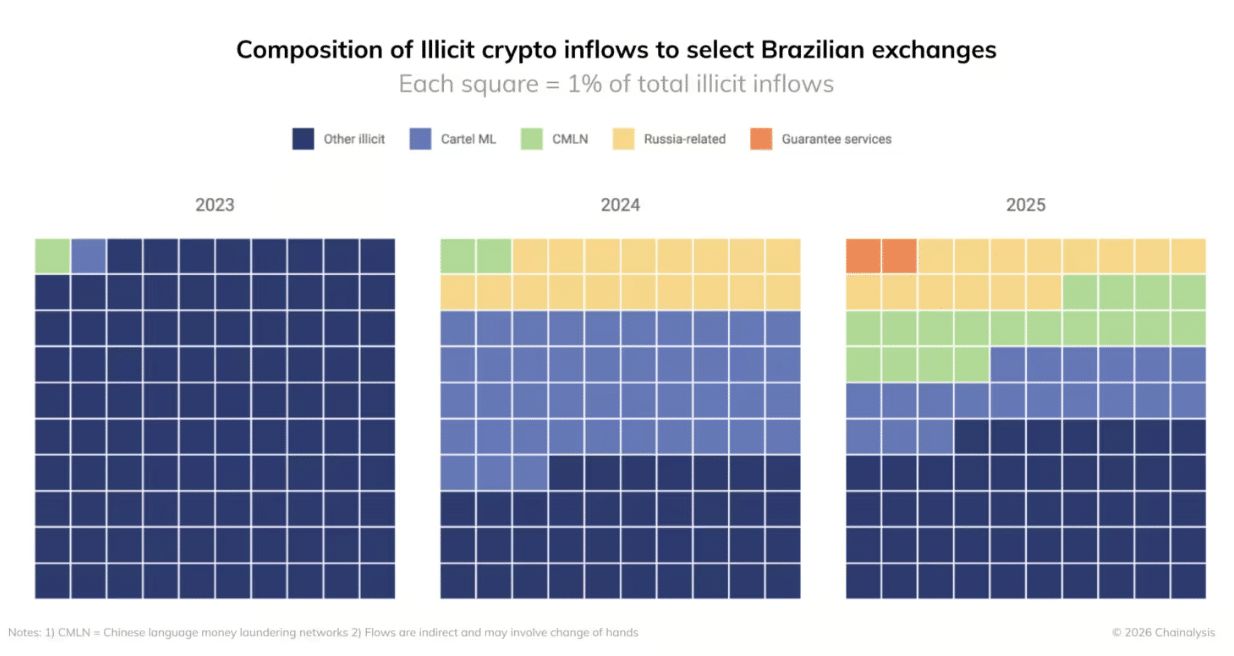
Additionally, the value of illicit cryptocurrency increased from $59 billion in 2024 to $154 billion in 2025. All while sanctions evasion increased by 694% to $104 billion.
For its part, the demand for cryptocurrency assets in Brazil increased by 135% year over year in H1 2026. It rose from $6.24 billion in H1 2025 to $14.68 billion.
At the same time, Tether invested $20 million in Mercado Bitcoin. It is of the largest digital asset platforms in Latin America and a regulated platform with its headquarters in Brazil.
Final Summary
- Brazil’s central bank is enforcing stronger anti-fraud regulations for cryptocurrency transfers.
- In 2025 alone, 50% of suspected illicit inflows were directed to certain Brazilian exchanges.
