

The CLARITY Act, the bill that would define whether digital assets fall under SEC or CFTC jurisdiction, has two remaining floor windows before the August recess: the weeks of July 20 and July 27.
Miss both, and Senator Lummis has warned that market structure legislation could slip to 2030 or die entirely at the end of the 119th Congress in January 2027, forcing a full restart.
That is not a political projection, it is the structural consequence of a Senate calendar that leaves roughly three weeks of productive session after September before lawmakers enter full midterm campaign mode.
One year after Washington’s Crypto Week, the scorecard is uneven. The GENIUS Act became law on July 18, 2025, establishing the first federal framework for payment stablecoins.
An anti-CBDC provision eventually passed inside the 21st Century ROAD to Housing Act, becoming law automatically on July 10, the House voted 358–32, the Senate 85–5, margins that made Trump’s refusal to sign irrelevant.
The CLARITY Act, which passed the House 294–134 on July 17, 2025, cleared the Senate Banking Committee 15–9 on May 14, 2026, and has sat on the Senate Legislative Calendar since June 1 with no floor vote scheduled.
The distinction between GENIUS and CLARITY matters here. GENIUS governed one product. CLARITY governs the entire market. It answers the classification question that determines everything downstream: whether a given digital asset falls under SEC jurisdiction as a security or CFTC jurisdiction as a commodity.
Registration, custody, listing decisions, and disclosure posture all flow from that single determination. Without a statutory answer, the question gets resolved by whichever agency sues first, or whichever party holds the White House.

Discover: The Best Token Presales
The Vote Math Is Getting Harder
Senate leadership needs 60 votes. The Republican coalition is already fractured. Senators Josh Hawley (R-Mo.) and Rand Paul (R-Ky.) were the only two Republicans to vote against the GENIUS Act; per Galaxy Digital analyst Alex Thorn, both are expected to oppose CLARITY as well.
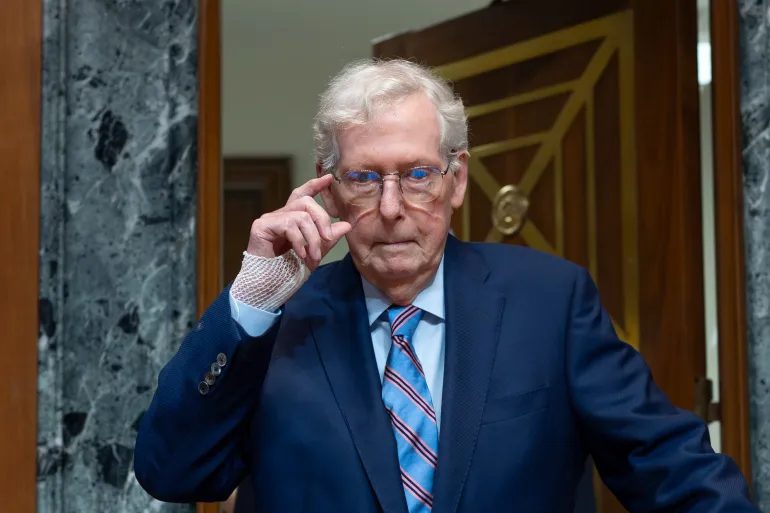
Senator McConnell has missed votes due to an ongoing medical issue, and the death of Senator Lindsey Graham at 71 further narrows an already thin Republican majority. By Thorn’s calculation, leadership may need as many as nine Democratic crossovers to reach the threshold.
Those crossovers are not secured. Senators Ruben Gallego (D-Ariz.) and Angela Alsobrooks (D-Md.) voted yes in committee but explicitly characterized those votes as conditional, not floor commitments.
Polymarket’s current passage odds in 2026 are approximately 34% and falling.
Discover: The Best Crypto to Diversify Your Portfolio
Clarity Act: Four Disputes, Zero Resolutions
The first and most visible obstacle is ethics. Senator Elizabeth Warren (D-Mass.) wrote to Majority Leader John Thune and Minority Leader Chuck Schumer on July 13, demanding guardrails preventing senior officials and members of Congress from profiting off the crypto industry.
The letter cited approximately $1.4 billion in crypto-related income disclosed in the president’s 2025 financial filing. Senator Kirsten Gillibrand (D-N.Y.) has made enforceable ethics language covering officials’ crypto holdings a prerequisite for her support. The merged draft from the Banking and Agriculture committees omits ethics provisions entirely.
A compromise floated by Senator Lummis would allow state attorneys general to sue exchanges that list tokens issued by public officials in violation of the act – but Senate Republicans are unlikely to advance any ethics language the White House actively opposes. For a detailed breakdown of this standoff, see the ethics dispute driving the CLARITY Act delay.
The second dispute centers on law enforcement. The National District Attorneys Association argued to Senate leadership that Section 604, the Blockchain Regulatory Certainty Act provision, would materially impair criminal investigations by shielding non-custodial software developers from money transmitter obligations.
Senator Ron Wyden (D-Ore.) countered that developers who never control customer funds should not be classified as money transmitters for publishing code. Senators Mark Warner (D-Va.) and Catherine Cortez Masto (D-Nev.) have tied their votes directly to law enforcement’s sign-off.
Third: banking trade groups, including the ABA and ICBA, argue the bill creates a stablecoin yield loophole allowing digital asset platforms to offer interest-equivalent rewards that circumvent the GENIUS Act’s prohibition on issuer-paid interest.
The Independent Community Bankers of America has questioned the bill’s pace entirely. Fourth, and structurally acute: the CFTC has operated with a single commissioner, and the SEC has two vacancies. Rules issued by a lone CFTC commissioner could invite legal challenge and keep jurisdictional uncertainty alive. Senator Amy Klobuchar has proposed blocking the framework from taking effect until at least four CFTC commissioners are confirmed.
Don’t Miss Out on Our $1,000 USDT Airdrop on ByBit
The post Two July Windows Left: The CLARITY Act’s Senate Fight and What Failure Means appeared first on Cryptonews.

