

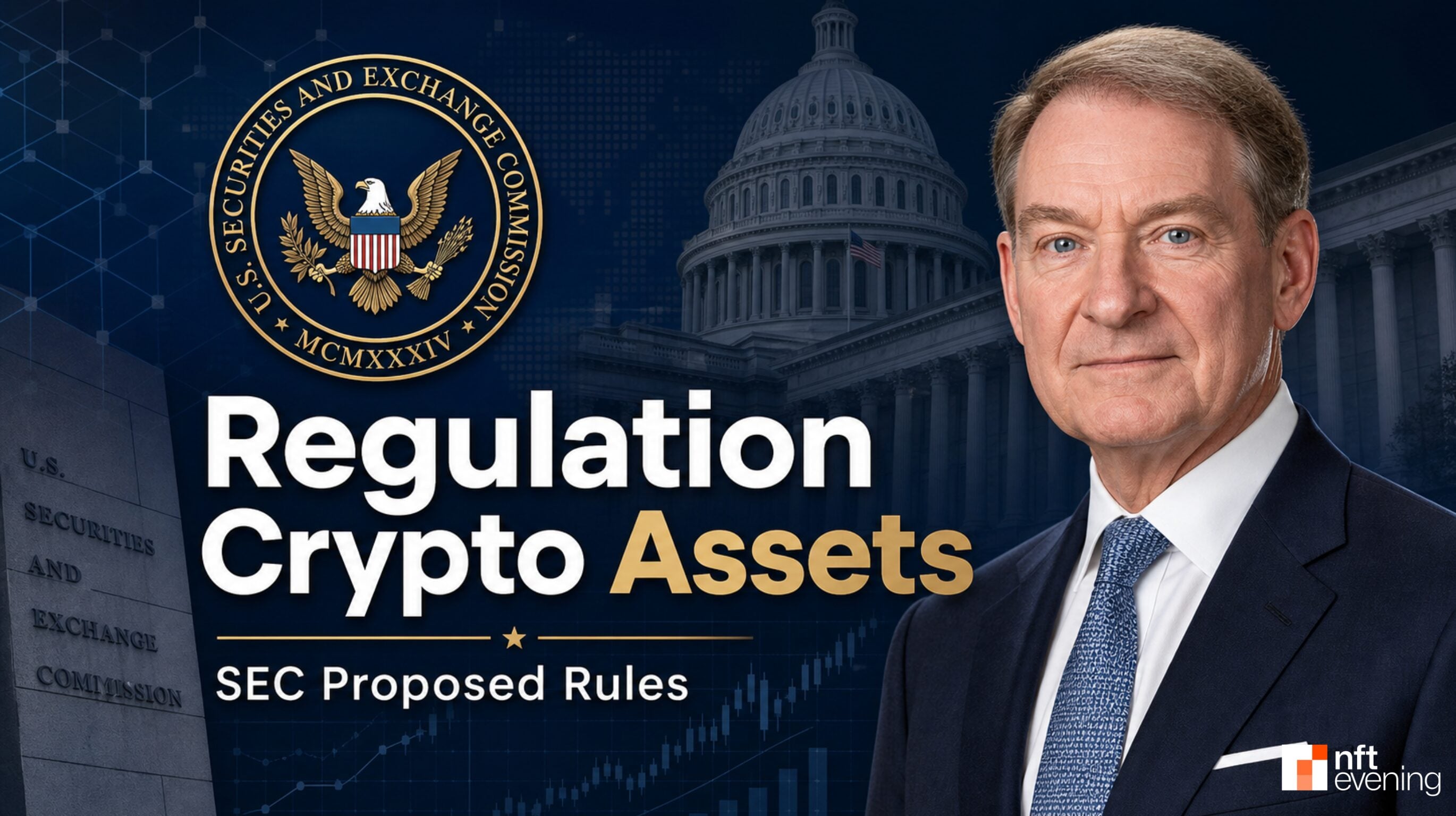
On August 18, the U.S. Securities and Exchange Commission (SEC) proposed a new set of rules titled “Regulation Crypto Assets” in Washington, D.C., aimed at creating a dedicated framework for certain investment contracts involving crypto assets. The proposal introduces two securities registration exemptions for token fundraising and a conditional safe harbor, marking the SEC’s largest crypto rulemaking step under Chairman Paul Atkins. The SEC stated the new framework aims to support domestic capital formation while maintaining investor protection requirements.
🚨 TODAY: The SEC proposed new rules, “Regulation Crypto Assets,” that would create a clear and fit-for-purpose framework for certain investment contracts involving crypto assets. pic.twitter.com/SAA2sErMXF
— U.S. Securities and Exchange Commission (@SECGov) August 18, 2026
From Guidance to Rules
This event marks the SEC’s clearest rulemaking proposal to translate its 2026 crypto guidance into an actionable framework. Back in March, the agency also issued an interpretive release clarifying how federal securities laws apply to certain crypto assets and related transactions. The current proposal builds on the March interpretive release, establishing specific rules for certain investment contracts involved in token fundraising.
SEC Chairman Paul Atkins said the proposal aims to provide crypto entrepreneurs and market participants with “clear pathways” to raise capital under federal securities laws. At the same time, Congress continues to work on a long-term regulatory framework for digital assets. It also marks the SEC’s most explicit effort to shift its approach to crypto from enforcement-led to rules-led.
Token Fundraising Path
At the core of the proposal are two mechanisms allowing certain crypto projects to raise capital without having to undergo standard securities offering registration under the Securities Act of 1933. These two mechanisms apply to certain investment contracts involving crypto assets, not all token issuances.
The first mechanism is a one-time exemption allowing issuers to raise up to $5 million over four years. This option targets projects that need an initial development phase before their network, product, or ecosystem reaches a more mature stage.
The second mechanism permits raising up to $75 million during every 12 months. Under this tier, issuers must provide financial statements and comply with ongoing reporting requirements.
Both mechanisms require issuers to provide principles-based narrative disclosures to investors. This signals that the SEC continues to anchor the proposal within federal securities laws, rather than decoupling token fundraising from investor protection standards. According to the SEC, these requirements aim to create a more tailored fundraising path for crypto issuers while maintaining disclosure and reporting obligations for investors.
Investment Contract Safe Harbor
Another notable highlight of the proposal is a conditional safe harbor, allowing certain crypto assets to no longer be treated as part of an “investment contract” under the definition of a “security” in the Securities Act of 1933 and the Securities Exchange Act of 1934.
According to the SEC, the safe harbor can apply once an issuer has completed, or permanently ceased, the “essential managerial efforts” previously represented or promised to investors. In other words, the proposal seeks to identify the point at which the development team’s role is no longer central to token buyers’ expectations of profit.
This point is significant because many U.S. crypto disputes center not just on the token itself, but on how the token was offered, investor expectations, and the issuer’s ongoing role post-fundraising. If implemented, the safe harbor could offer a clearer standard to assess when a crypto asset is no longer tied to its initial investment contract.
Why Crypto Firms Care
For U.S. crypto firms, this proposal would open a clearer pathway for fundraising without needing to exit the domestic market. The SEC noted that the new rules aim to reduce incentives for issuers to launch and operate projects offshore, while expanding investment opportunities for U.S. investors under a more consistent set of protective standards.
If approved, the framework could directly impact token issuers, crypto startups, venture-backed protocols, and platforms supporting secondary trading. The proposal could also lower state-level hurdles by preempting certain state securities registration and qualification requirements for offerings under this framework.
This move helps the SEC retain a major role in shaping crypto market structure, even as Congress pushes forward broader legislation like the CLARITY Act. The real-world impact will depend on the final version of the rule, particularly regarding disclosure requirements, reporting obligations, and safe harbor conditions.
What Comes Next
Publication in the Federal Register will open a 60-day public comment period, during which the SEC will receive feedback from issuers, investors, exchanges, lawyers, academics, and policy advocacy groups. This feedback could lead to modifications to the proposal before the SEC considers a final rule.
On Capitol Hill, the CLARITY Act and ongoing efforts to establish crypto market structure could still influence the final scope of the framework. Industry groups and investor protection advocates are likely to focus on fundraising caps, disclosure requirements, safe harbor conditions, and the scope of protected secondary trading.
In the short term, Regulation Crypto Assets does not immediately legitimize every token offering in the U.S. However, the proposal marks the SEC’s most concrete step toward creating a dedicated rulebook for token fundraising and investment contracts involving crypto assets.
