


Bitcoin’s post-halving cycle is unfolding differently from previous market expansions, raising questions about whether the traditional four-year pattern still applies.
Historically, Bitcoin’s [BTC] demand accelerated after halvings and absorbed the tightening supply.
This time, however, Apparent Demand remained negative through much of 2026, even falling near -147,000 BTC in May. That weakness suggests new buying has struggled to keep pace with available supply.
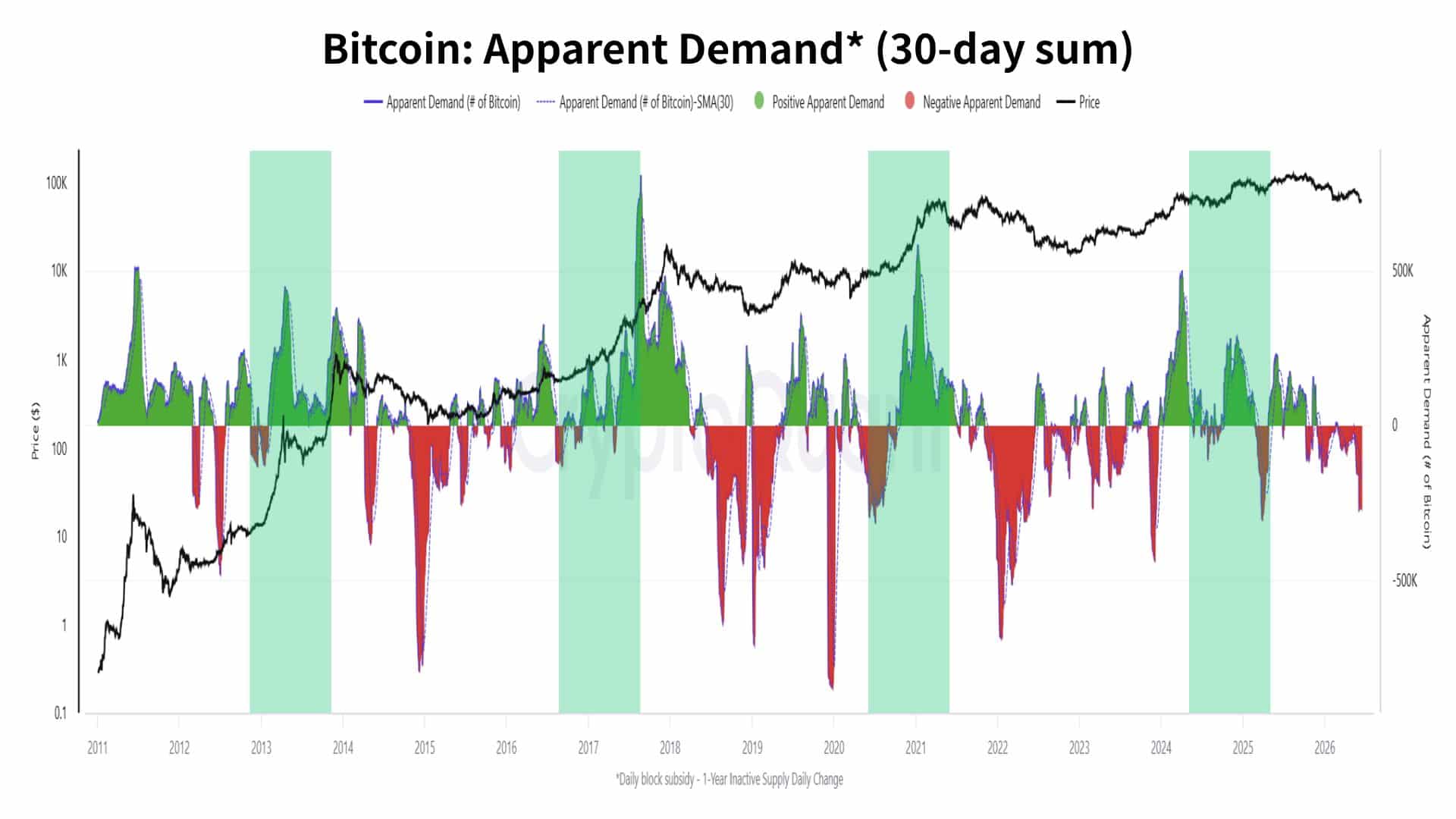
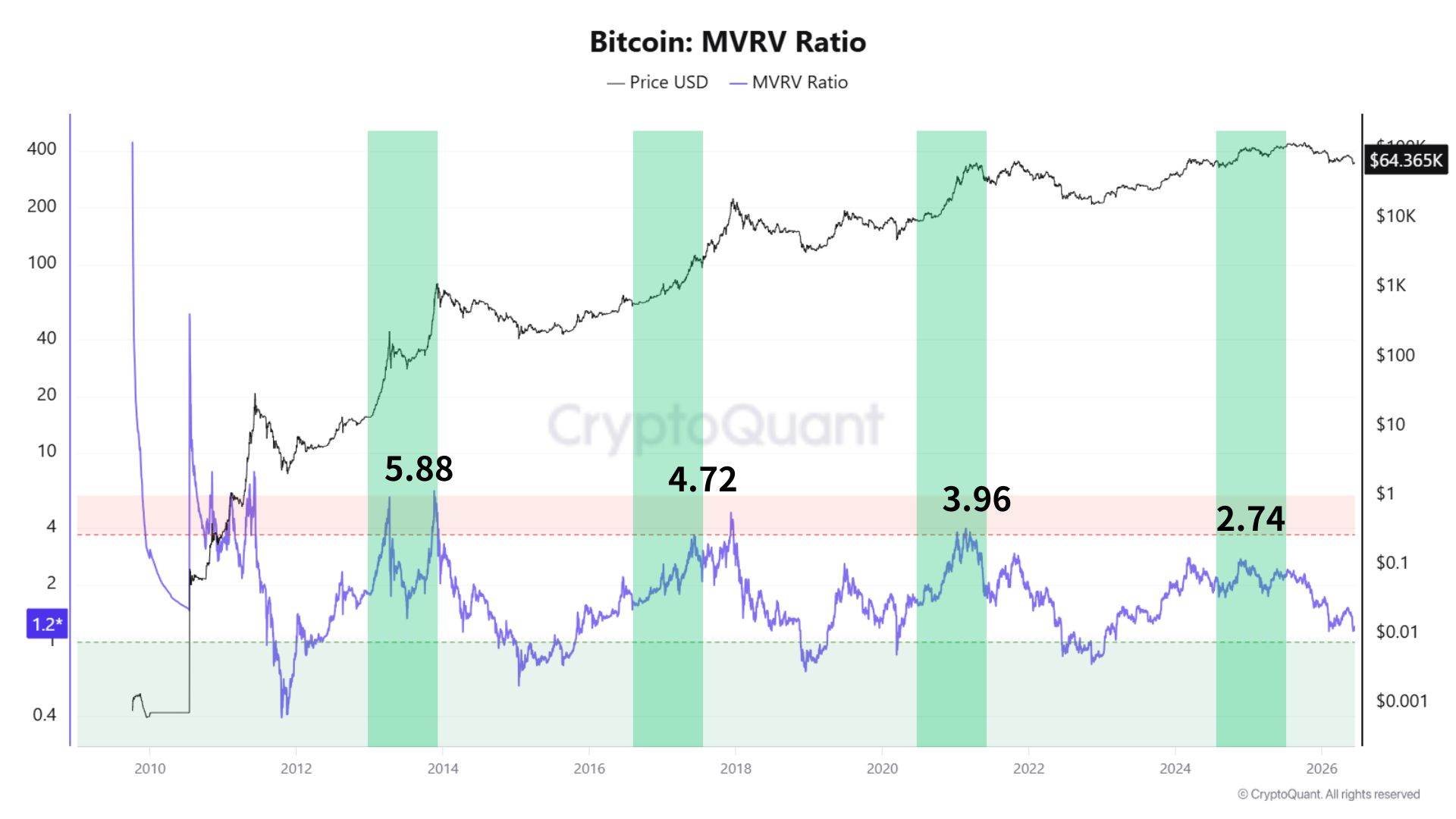
Meanwhile, MVRV peaked at 2.74 in 2025, well below prior cycle highs of 3.96, 4.72, and 5.88. The decline points to a maturing market with less speculative excess. Yet Bitcoin continues trading around $64,365, showing demand has not disappeared entirely.
Instead, the market appears caught between institutional support and slowing spot accumulation. Whether Bitcoin resumes its uptrend or extends consolidation may depend less on cycle timing and more on renewed demand growth.
Liquidity emerges as Bitcoin’s key constraint
While demand has weakened across much of 2026, liquidity conditions reveal a deeper challenge for the current cycle. While Bitcoin’s supply remains relatively constrained, the flow of fresh capital has weakened.
In fact, Bitcoin ETFs have faced persistent outflows in 2026, signaling institutional fatigue amid liquidity weakness.
Stablecoin supply has grown toward $320 billion, yet new issuance has slowed sharply while global M2 liquidity expanded only modestly. This explains why Bitcoin has struggled to build on its post-halving gains despite tighter supply conditions.
Yet the market has remained more resilient than in previous cycles. Moreover, the relatively shallow 45-50% drawdown from its $126k peaks suggests institutional capital is absorbing part of the pressure, even as liquidity conditions limit expansion.
Still, demand is only one side of the equation shaping Bitcoin’s current cycle. Exchange reserves have fallen toward 2.7 million BTC as coins move into self-custody and long-term storage.
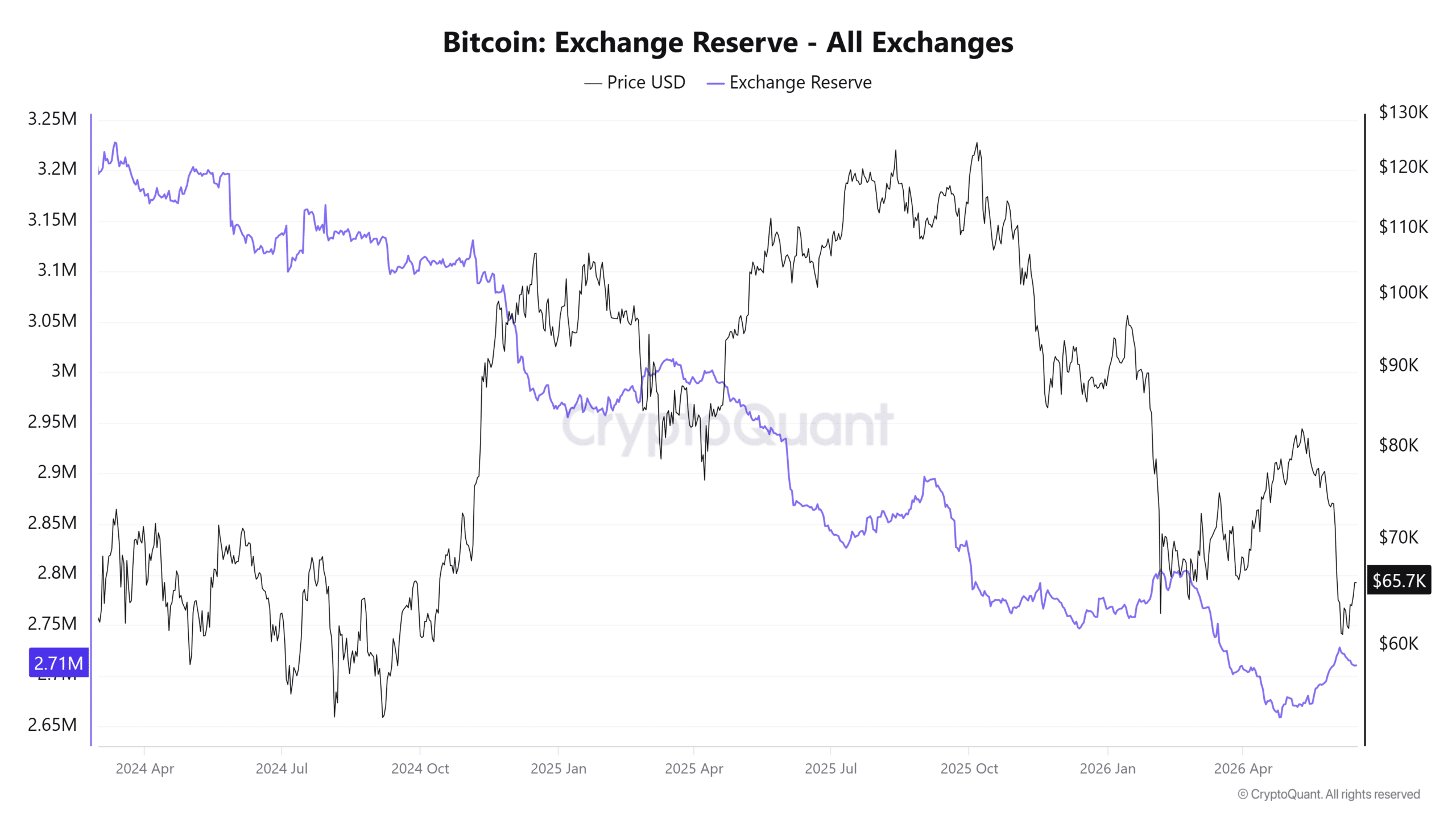
This reduces the amount of Bitcoin readily available for sale, helping offset softer buying activity. Meanwhile, beyond supply dynamics, the market itself is changing. ETF holdings have grown beyond 678,000 BTC, and cumulative inflows approach $54 billion.
As institutional ownership expands, Bitcoin appears increasingly influenced by capital allocation decisions rather than halving cycles alone. That shift may reduce volatility, though renewed demand remains essential for a sustained advance.
