


- CLARITY Act: Regulatory clarity could reduce institutional uncertainty and make Bitcoin easier to integrate into mainstream finance.
- AI and Crypto: AI agents could drive blockchain adoption through autonomous payments, with Bitcoin potentially serving as a reserve or collateral asset.
- Stablecoins: Stablecoin growth could bring significantly more dollar liquidity on-chain, indirectly expanding the pool of capital available to Bitcoin.
- Bitcoin Scarcity: The 2028 halving will further reduce new BTC issuance, strengthening scarcity if demand continues to grow.
- Bitcoin 2030: The article outlines scenarios ranging from $80,000–$150,000 under weak adoption to $500,000–$1 million if Bitcoin gains a much larger global monetary role.
Bitcoin’s Trajectory Through 2030
Bitcoin’s trajectory through 2030 will likely depend more on whether cryptocurrencies are integrated into standard financial and technological infrastructure than on another retail-driven speculative cycle.
Regulatory clarity, significantly larger stablecoin markets, autonomous AI payments, increased institutional adoption, and another Bitcoin halving could all occur in the next four years.
These developments do not guaranty a specific price for Bitcoin. They do, however, establish a viable path toward a significantly bigger Bitcoin market.
Under comparatively conventional adoption assumptions, a reasonable 2030 framework places Bitcoin between $150,000 and $500,000, but a much stronger monetary and institutional transition could push BTC toward $750,000–$1 million.
On the other hand, Bitcoin might move closer to the $80,000–$150,000 range if the crypto infrastructure fails to advance beyond speculation.
CLARITY Act: The Regulatory Push Continues Despite Failure
The United States’ immediate regulatory landscape is still incomplete. In the Senate, the Digital Asset Market Clarity Act did not pass on September 15, 2026. The motion did not receive the necessary 60 votes, with 49 votes in favor and 50 against.
The legislative process was not formally exhausted because Senator Thom Tillis later filed a motion to reconsider.
You Might Also Like

There is more to the dispute than just whether or not cryptocurrency should be regulated. The legislation defines a regulatory framework for digital commodities while attempting to create a clearer separation of powers between the SEC and CFTC.
Critics have expressed concerns about consumer protection, ethics regulations, DeFi oversight, and the limits of regulatory exemptions, while supporters claim that this would lessen legal uncertainty.
Following the unsuccessful vote, senators from both parties who had taken part in the negotiations stated that they planned to keep working on legislation.
You Might Also Like

The overall trajectory of Bitcoin is more important than the precise name of the final bill.
For banks, asset managers, custodians, and businesses that are still wary of digital assets, a robust market-structure law might remove an additional obstacle.
AI May Open Up a Whole New Crypto User Base
The most intriguing 2030 thesis may have little to do with people purchasing cryptocurrencies. The ability for AI agents to make independent financial decisions is becoming more and more important.
Purchasing processing power, querying a paid database, scheduling a service, paying another agent, or paying pennies on the dollar for API calls are all examples of autonomous agents.
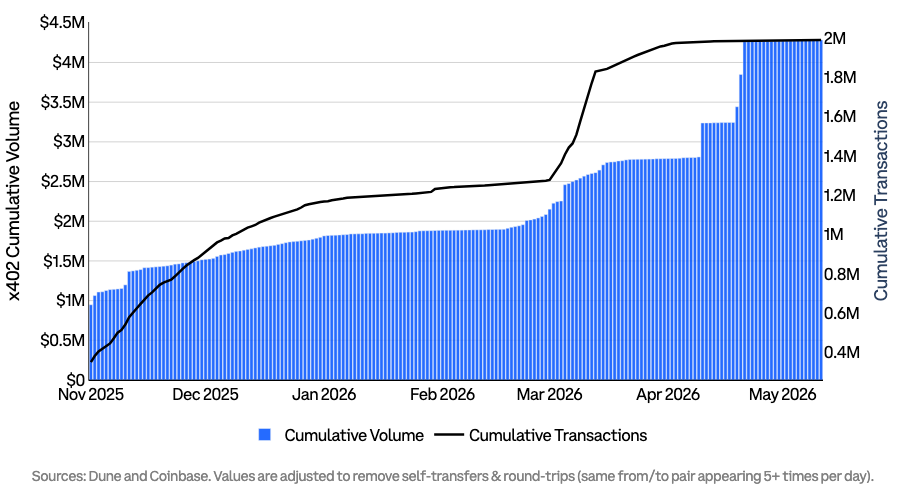
The infrastructure of traditional banking was built with identified human account holders and comparatively big transactions in mind. Millions of software processes that are constantly making small payments are not well suited for it.
For instance, software and AI agents can use stablecoins to automatically pay for APIs and online services thanks to Coinbase’s x402 protocol. In 2026, Coinbase extended the system to accommodate more extensive ERC-20 payments.
To put it another way, the use of AI could grow cryptocurrency without requiring AI systems to exchange Bitcoin directly.
Stablecoins Could Be the Indirect Growth Engine for Bitcoin
In the end, stablecoins may be more crucial to the uptake of Bitcoin than a new wave of speculative tokens.
Compared to the overall structure of the cryptocurrency market, the United States has already made significant progress on stablecoins.

In July 2025, the GENIUS Act was passed into law, establishing a federal framework for stablecoin payments.
Traditional dollars and blockchain markets are connected by stablecoins. It is much simpler to transfer capital into Bitcoin, Ethereum, tokenized securities, lending markets, or other cryptocurrency assets once it is on-chain as USDC, USDT, or another regulated dollar token.
You Might Also Like

More stablecoins indicate that more capital is already functioning within the cryptocurrency infrastructure, as opposed to entering through bank transfers each time an investor wishes to buy BTC.
Additionally, the link to traditional finance is becoming more and more significant. The same analysis cautioned that during times of stablecoin stress, growth might also have an impact on bank deposits and create new risks.
As a result, rather than just existing outside of the dollar system, cryptocurrency is progressively becoming integrated with it.
The Scarcity of Bitcoin Is Important
Before 2030, technology might change significantly, but Bitcoin’s supply policy won’t. The block subsidy should drop from 3.125 BTC to 1.5625 BTC during the next planned halving in 2028.
Nearly all of Bitcoin’s eventual 21 million supply will already exist by 2030, with new issuances making up a very small portion of the total supply.

If demand continues to rise, that is important. A $250,000 Bitcoin would imply a market capitalization of about $5. 1 trillion, given that there are currently about 20. 5 million BTC in circulation.
It would come close to $10. 3 trillion at $500,000. About $20. 5 trillion would be needed to purchase $1 million worth of Bitcoin.
You Might Also Like

These numbers show why the most optimistic predictions call for more than just another cryptocurrency boom. Bitcoin would have to grow into a significant reserve and store-of-value asset on a global scale.
Price Forecast for Bitcoin in 2030
Instead of assuming that a precise four-year target can be determined, three broad scenarios make more sense.
In a world where institutional growth stagnates, AI commerce primarily uses traditional payment networks, stablecoins grow without significantly increasing demand for BTC, and regulation remains fragmented, a weak-adoption scenario of $80,000-$150,000 would fit.

A base scenario of between $200,000 and $400,000 is predicated on ongoing institutional allocation, a much larger stablecoin economy, more transparent regulations, and a slow adoption of Bitcoin as a treasury and portfolio asset.
Something more structural is needed for a high-adoption scenario of $500,000–$1 million: Bitcoin would need to take a much bigger chunk of global savings, institutional portfolios, and possibly corporate or sovereign reserves, while blockchain infrastructure becomes a significant settlement layer for both autonomous software and humans.
You Might Also Like

Therefore, the most compelling argument for Bitcoin in 2030 might not be that everyone will start using BTC to pay for coffee.
The financial system is becoming more and more digital; stablecoins transfer dollars onto blockchains; AI generates millions of new independent economic actors; tokenization transfers traditional assets onto chains; and Bitcoin continues to be the scarce neutral asset that sits beneath a much larger digital economy.
